
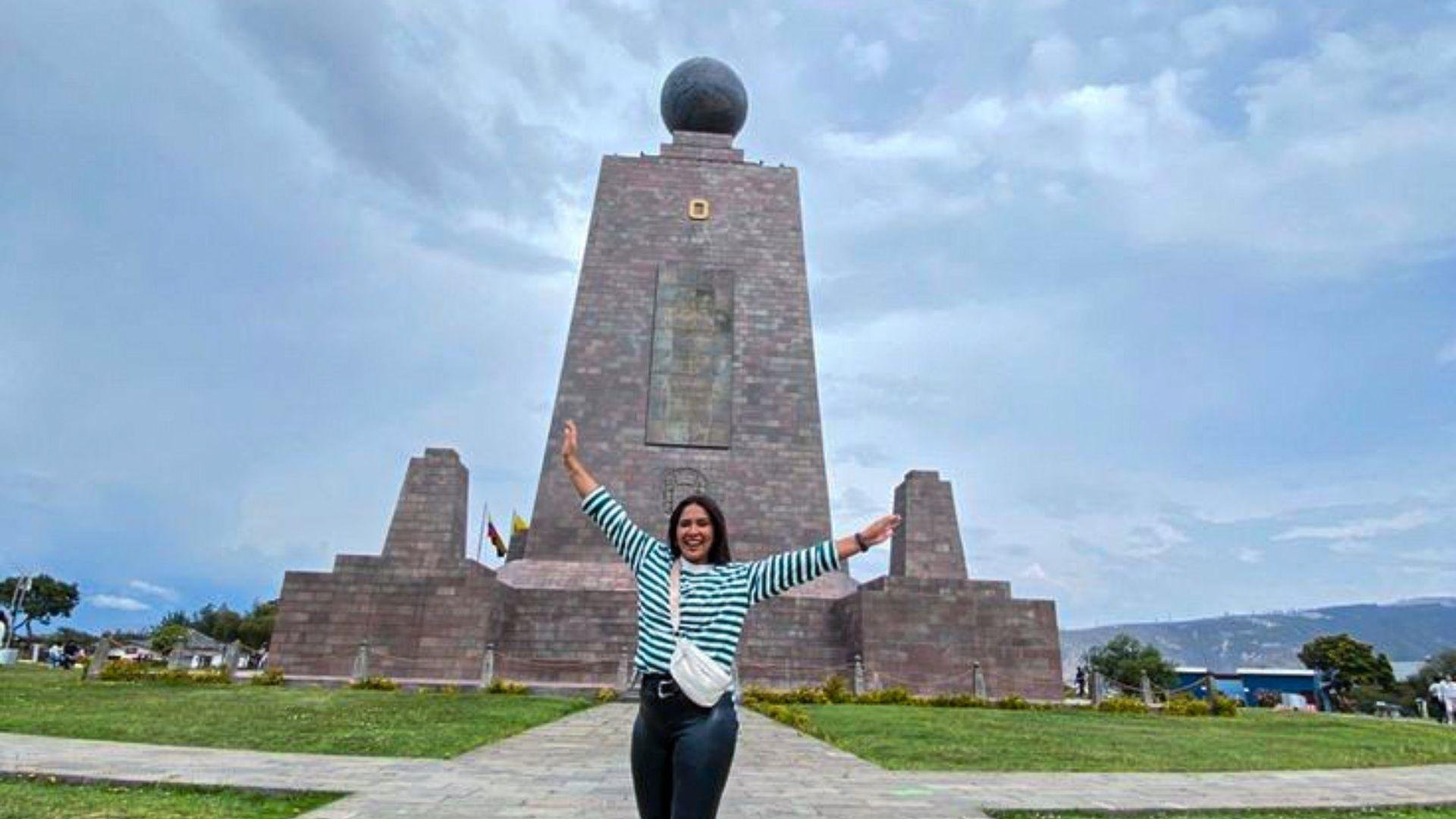
4 hr
Equator Monument & Pululahua Volcano Half-Day Tour
Stand at the Earth's center line and peer into one of the planet's rare inhabited volcanic craters
Reserve
Hand-picked by our editors — only the best 5 experiences from 12 reviewed
Verified partners for every tour, free cancellation where available, and instant confirmation on every booking.
4 hr
Stand at the Earth's center line and peer into one of the planet's rare inhabited volcanic craters
Reserve
5 hr
Straddle two hemispheres, witness equator experiments, and gaze into an inhabited volcanic crater
Reserve
4 hr
Stand on the equator line, explore fascinating science experiments, and experience both hemispheres in one day
ReservePrices from verified partners. Availability updates in real time at checkout. Free cancellation policies apply where shown.
They complement each other; most visitors who do both find the government monument better for photography, while the private museum offers a more tactile equatorial encounter. Choosing the right mitad del mundo quito tour bus helps ensure a seamless transition between these two prominent landmarks.
| Feature | Top pick Mitad del Mundo | Intiñán Solar Museum |
|---|---|---|
Primary Focus |
Monumental architecture and geography | |
Scientific Demonstrations |
None | |
Architecture |
Colonial style center piece | |
Ideal For |
Photo opportunities and group tours | |
Time Required |
1.5–2 hours | |
Location |
Av. Manuel Córdova Galarza | |
| See tickets → |
Verdict: Select the government-run monument for its iconic landscape views, or opt for Intiñán when seeking hands-on scientific experiments as part of your mitad del mundo quito tour bus tickets experience.
Choose your ticket, select your date, and reserve in under two minutes. Secure checkout handled by our verified partner.
Instant confirmation by email, with a mobile voucher you can save offline. No printing, no queuing at a collection desk.
Arrive at the entrance, show your voucher on your phone, and walk in. Most tickets include priority or skip-the-line access.
Practical details for your visit straight from our verified partners — hours, access, rules, and how to get there.
Av. Manuel Córdova Galarza
Primary entry gate for all independent and group visitors.
Take the Metrobús to De la Ofelia station and transfer to the local Mitad del Mundo bus.
Hire an official yellow taxi or rideshare app directly from downtown Quito.
Dress in layers to adapt to the fluctuating Andean temperatures. Comfortable walking shoes are recommended for exploring the plaza and monument grounds.
Standard security checks are performed at the entrance. Avoid bringing large luggage as there are no secure storage lockers provided for bulky items.
Photography is encouraged throughout the complex, particularly at the yellow line monument. Professional equipment setups may require prior authorization from administration.
The site is largely accessible to wheelchair users, with paved boulevards connecting the major plazas. Ramps are available at the entrance of the primary equator monument.
Mobile phones are permitted throughout the park for personal use and photography. Excellent network coverage is available across the entire monument area.
The complex is family-friendly with open plazas and interactive exhibits suitable for children. Strollers can be used on all main pathways within the Ciudad Mitad del Mundo grounds.
Several casual eateries and souvenir-style cafes are located within the Ciudad Mitad del Mundo village. Visitors are encouraged to carry a reusable water bottle for hydration.
Pets are generally not permitted inside the exhibition buildings. Service animals are allowed with proper documentation presented at the entrance.
The 5 USD entrance fee grants general admission for foreign adults to the main complex. Be prepared for direct UV exposure due to the high-altitude equatorial location.
Av. Manuel Córdova Galarza
Primary entry gate for all independent and group visitors.
Get directionsBest time to go, insider tips, nearby landmarks, and the cancellation fine print — flip through to skim what matters to you.
How crowds, weather, and events shift across the year.
Enjoy mild autumn weather with lower rainfall and clear skies for photography. Early morning visits are ideal to avoid the heat.
Peak tourist season with cultural events occurring in the plazas. Expect larger crowds during weekend afternoons.
Cooler, drier days perfect for outdoor walking. Mid-week mornings offer the quietest experience.
Moderate crowds with lush surroundings. Perfect for those who prefer a relaxed pace through the complex.
Small details that turn a good visit into a great one.
Most tour groups arrive after lunch, so visiting at 09:00 ensures a much quieter experience at the monument.
The equatorial sun is intense, but temperatures drop quickly if clouds roll in over the mountains.
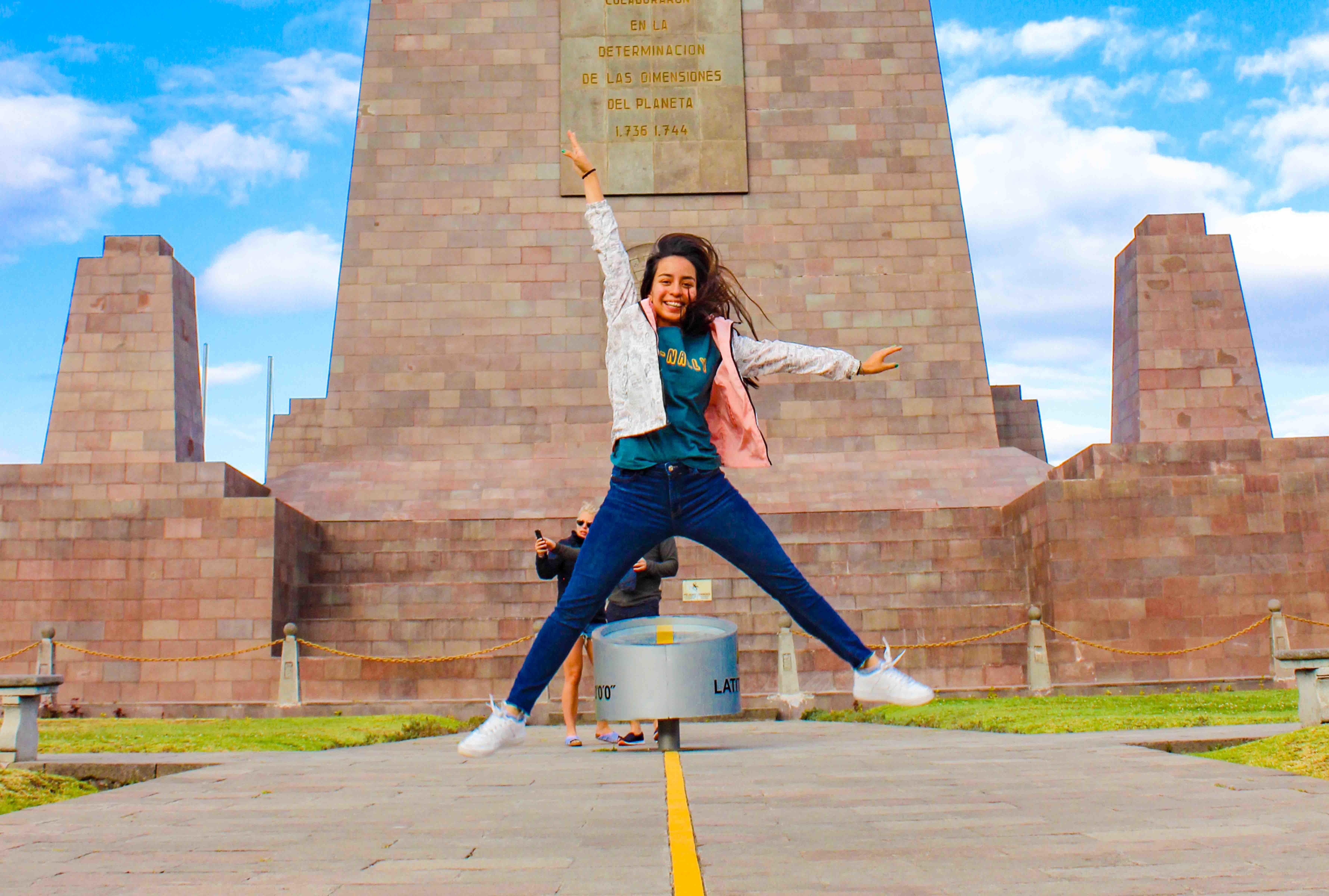
To capture the classic photo, wait for the crowds to dissipate from the yellow painted line which marks the equator.
Due to the high elevation and position on the equator, UV radiation is significantly higher than at sea level.
Visit the official site at https://mitaddelmundo.gob.ec for any holiday-specific closures or event schedules.
Non-bookable sights within a short walk — free to visit, easy to pair.
Explore interactive exhibits regarding the equator's gravitational pull and local history.
Flexible, no hidden fees.
All ticket sales for the Ciudad Mitad del Mundo complex are final. No refunds are provided for the 5 USD entrance fee once purchased.
Hand-picked options within walking distance — pick a district for vibe, or a specific hotel for convenience.
Convenient local stays near the equatorial monument.
The original Mitad del Mundo monument was erected in 1736 to mark the spot where French geodesic mission scientists believed the equator crossed the Andes, yet modern GPS measurements place the true line 240 metres north at the Intiñan Solar Museum. The 30-metre concrete monument that stands today, inaugurated in 1982, anchors a sprawling Ciudad Mitad del Mundo complex along Avenida Manuel Córdova Galarza in San Antonio de Pichincha, 26 kilometres north of Quito's colonial centre. A brass line bisects the plaza floor, and visitors queue to photograph one foot in each hemisphere beneath the iron globe that crowns the obelisk. Quito's position astride the equator has shaped its identity since pre-Columbian times, when Quitu-Cara peoples oriented ceremonial platforms and agricultural terraces to the solar calendar. The monument itself houses an ethnographic museum across four floors, with galleries dedicated to indigenous cultures of Ecuador's coastal, Andean, and Amazonian regions. Exhibits include ceremonial textiles from Otavalo, carved balsa-wood figures from Manabí, and shrunken tsantsa heads prepared by Shuar communities. The top-floor observation deck offers 360-degree views across the Guayllabamba River valley toward the volcanic rim of Pululahua, one of only two inhabited calderas in the world. Mitad del mundo quito tour bus services depart central Quito throughout the morning, with most half-day itineraries pairing the monument with either the Intiñan Museum or a descent into Pululahua Crater. The Intiñan site, operating independently since 1978, stages equatorial experiments — water spiraling counterclockwise and clockwise on either side of the painted line, eggs balanced upright on nail heads, and volunteers attempting to walk a straight path with closed eyes. Though these demonstrations simplify Coriolis forces beyond scientific accuracy, they remain the complex's most photographed attraction. The monument plaza itself contains artisan workshops, a cacao museum, and a small planetarium that projects Andean star lore onto its dome. Middle of the world tours from Quito typically allocate two hours at the monument grounds, with general admission priced at five US dollars for foreign adults as of 2026. The site opens at 09:00 daily, and arriving before 11:00 ensures cooler temperatures and lighter crowds before weekend coach groups arrive. Sunday markets fill the surrounding streets with produce vendors and wool-dyers, while the monument's western esplanade hosts occasional folklore performances and kite festivals during June solstice celebrations.
"Modern GPS places the true equator 240 metres north of the monument, yet the brass line remains Ecuador's most visited geographical landmark."
A step-by-step walkthrough of the visit — what you'll see, how long each stage takes, and the details that matter.
You board the tour bus at a central Quito pickup point before 09:00, heading north along the Panamericana through industrial outskirts and eucalyptus groves. The road climbs through San Antonio de Pichincha, where whitewashed houses cling to hillsides, then descends into the Guayllabamba valley. Forty minutes later the monument rises ahead, its yellow obelisk capped with an iron sphere visible across the plateau. You step onto the plaza and locate the brass equatorial line embedded in the concrete. Tourists pose with limbs straddling the strip, and you wait your turn before walking the length of the plaza, one foot in the northern hemisphere and one in the southern. Inside the monument, a narrow staircase spirals past ethnographic displays — ceramic vessels, woven shigras, and sepia photographs of Amazonian communities. The observation deck at the top frames Pululahua's forested rim to the west and the snow-patched bulk of Cayambe volcano to the northeast. If your mitad del mundo quito tour bus ticket includes Intiñan, you cross the road to a smaller compound where a guide pours water through a funnel held precisely on the painted line, then steps one metre north and south to demonstrate the reversal of the vortex. You attempt to balance an egg on a nail head, succeeding on the third try, and receive a stamped certificate. Before reboarding, you browse the artisan stalls for tagua-nut carvings and alpaca scarves, then return to Quito by early afternoon.
The site is open Monday to Friday from 09:00–17:00 and weekends from 09:00–18:00.
General admission for foreign adults is 5 USD.
Tickets can be booked online via the official site or at the ticket office upon arrival.
We recommend arriving between 09:00–11:00 to avoid large crowds and peak temperatures.
Yes, the village area inside the Mitad del Mundo complex features various cafes and food stalls.
You can take the Metrobús to De la Ofelia station and then transfer to the local bus that travels directly to the site entrance.
Yes, the complex is family-friendly with paved areas suitable for strollers and children.
Prohibited items include firearms, sharp objects, and explosives; a full list is enforced for the safety of all guests.
Photography is welcome throughout the complex, especially near the iconic equator monument.
Tickets are non-refundable, so please ensure your planned arrival date aligns with your itinerary before purchase.