English| EUR
Suggested for you
More currencies
Choose a language
Quito holds the distinction of being the world's second-highest capital and the closest national capital to the equator. The city's northern suburbs extend across latitude zero, where Ecuador built its most-visited monument to mark the dividing line between hemispheres.
Quick answer
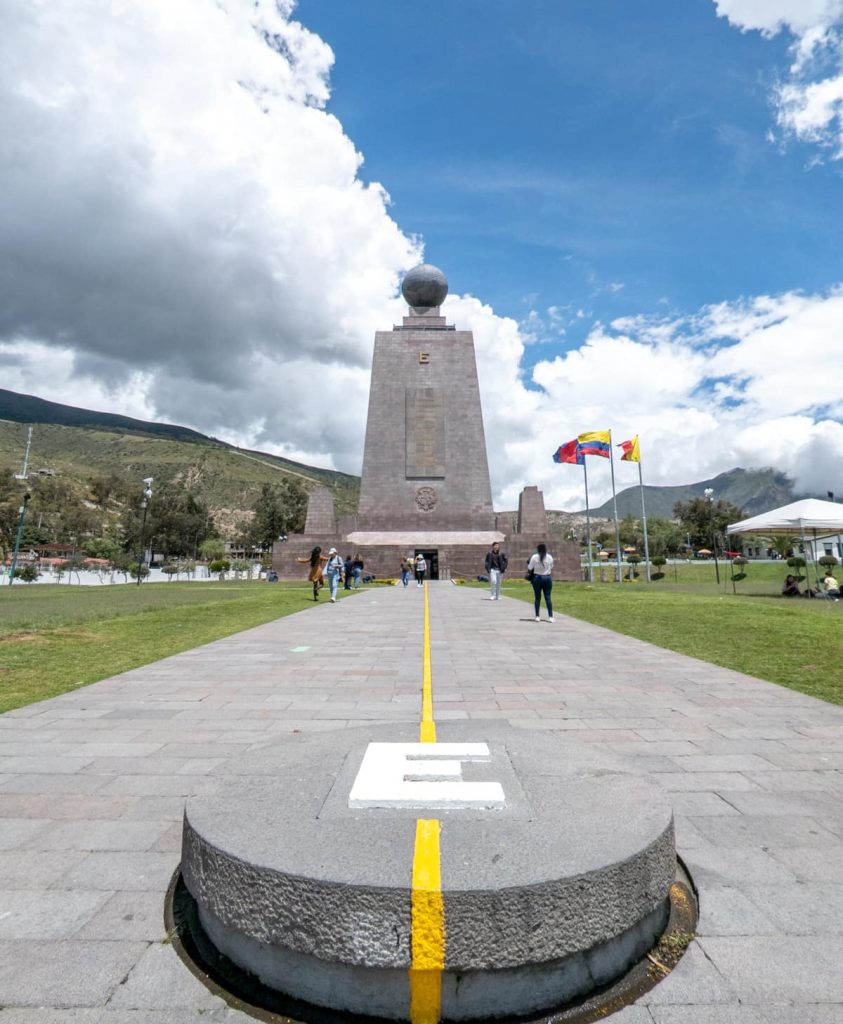
Quito itself sits just south of the equator at approximately 0.18° south latitude, but the city's metropolitan area straddles the equatorial line. The Mitad del Mundo monument complex, located 26 kilometers north of Quito's historic center in San Antonio de Pichincha, marks the calculated position of the equator and welcomes visitors daily from 09:00 to 17:00 on weekdays and until 18:00 on weekends.
Ecuador takes its name from the Spanish word for equator, and no country on Earth embraces its zero-latitude geography more visibly. The equatorial line crosses through thirteen countries, yet only Ecuador built a monument complex dedicated to the invisible divide, making the question of whether Quito sits on the equator inseparable from the country's identity itself. The capital's colonial core lies 25 kilometers south of latitude zero, but the city's northern expansion over the past century brought its suburbs and airport across the line. San Antonio de Pichincha, now functionally part of greater Quito, became the site of the Mitad del Mundo complex in 1979 after an 18th-century French geodesic mission calculated the equator's path through the Andean highlands. The yellow monument and its painted line attract over half a million visitors annually, drawn by the novelty of standing in both hemispheres simultaneously and the chance to perform equatorial experiments with water and balance. Modern GPS measurements reveal the true equator runs 240 meters north of the monument, a discrepancy explained by the instruments available to Charles-Marie de La Condamine's 1736 expedition. The monument remains on its original site, and most visitors treat the precision debate as trivia rather than dealbreaker. What matters more is the experience—walking the painted yellow line, photographing the oversized globe monument, and visiting the ethnographic museum inside the structure. The complex opens at 09:00 daily, with general admission priced at 5 USD for international visitors. Weekday mornings between 09:00 and 10:30 offer the clearest photo opportunities before tour groups arrive from central Quito. The Ecuadorian capital's relationship with the equator remains more symbolic than strictly cartographic. Quito promotes itself as the equatorial capital, and the Mitad del Mundo monument anchors that identity whether the line beneath your feet is off by a few hundred meters or not.
“Ecuador built a monument complex dedicated to the invisible divide between hemispheres, making the country's equatorial identity inseparable from the capital itself.”
While the city of Quito is located in the proximity of the equator, the precise equatorial line is situated north of the city center. This geographical marker is located at the Ciudad Mitad del Mundo complex in San Antonio de Pichincha.
The equatorial line is defined as 0 degrees latitude, which divides the Earth into the Northern and Southern Hemispheres.
The Ciudad Mitad del Mundo complex lies approximately 25 kilometers north of Quito's historic city center.
The site of the equatorial monument is located specifically within the parish of San Antonio de Pichincha.
Early geodesic missions established the location, though modern GPS technology indicates the true equatorial line runs slightly north of the primary monument.
The region is defined by the high-altitude Andean landscape, with the complex sitting at an elevation of roughly 2,480 meters above sea level.
The monument and its surrounding complex are accessed via the Av. Manuel Córdova Galarza roadway.
The Ciudad Mitad del Mundo complex is open daily throughout the week to accommodate visitors. Weekend hours are extended to provide more time for your visit.
The best arrival window is 09:00–10:30. Arriving early helps avoid crowds for better photos along the equatorial line.
—
These times offer the lowest visitor density for site navigation and photography.
Dry, cool, average 15°C to 20°C
This period aligns with the dry season, providing clear skies despite larger visitor volumes.
Mild, occasional rain, average 16°C
These shoulder months balance comfortable weather with manageable visitor levels for a visit.
Verdict: The best time to visit is weekday mornings between 09:00 and 10:30 during the months of April or October.
The Ciudad Mitad del Mundo monument is located in San Antonio de Pichincha, approximately 25 kilometers north of Quito's historic center. The most common way to reach the site is by combining public transport or taking a direct taxi from the city.
MetroQ to Ofelia Station, then take the 'Mitad del Mundo' feeder bus
Direct from Quito city center via Av. Manuel Córdova Galarza
Drive via Av. Manuel Córdova Galarza heading north
Arriving early helps avoid crowds for better photos along the equatorial line. Parking is available on-site at the main entrance on Av. Manuel Córdova Galarza.
Everything you need to know about is quito on the equator
While the city itself is located just south of the latitude 0, the Ciudad Mitad del Mundo monument marks the equatorial line. Many travelers ask if quito on the equator is accurate, and the answer is that the specific monument location is the primary point of interest. It serves as the official landmark for latitude zero.
The complex is located in San Antonio de Pichincha, approximately 20 to 30 kilometers north of Quito's historic center. Depending on traffic, reaching this iconic landmark takes about 45 to 60 minutes by car or public transport. Checking transit routes in advance helps clarify if quito on the equator is reachable for your schedule.
Yes, the site is designed for visitors to straddle the line and take photos. This popular destination allows you to stand in both hemispheres simultaneously, which is why many people research is quito on the equator before arriving. It features museums, local crafts, and cultural exhibits.
The most efficient approach involves booking a guided Mitad del Mundo tour to manage logistics and transportation. Since travel times can vary, planning your visit in advance ensures a smooth experience. You can find more details on our official site to finalize your plans.
The monument and surrounding village offer a unique perspective on geography and regional history. Visitors often find that observing the latitude marker provides a memorable context for their time in Ecuador. It is a central part of any visit to the capital region.
While the main monument is the most recognized, there are nearby museums that use GPS technology to highlight the exact equatorial path. Some visitors explore these smaller sites to complement their main visit. Exploring multiple spots provides a comprehensive look at the geography of the region.
Foreign adult visitors must pay an entrance fee of 5 USD to access the complex. You do not need to choose complex ticket tiers, as the general admission provides entry to the site. This simple fee structure makes planning straightforward for all guests.
Yes, the site is open on both Saturdays and Sundays from 09:00 to 18:00. Arriving during the suggested morning window helps avoid larger crowds for better photography. Check the official site for any specific updates before you head out.